
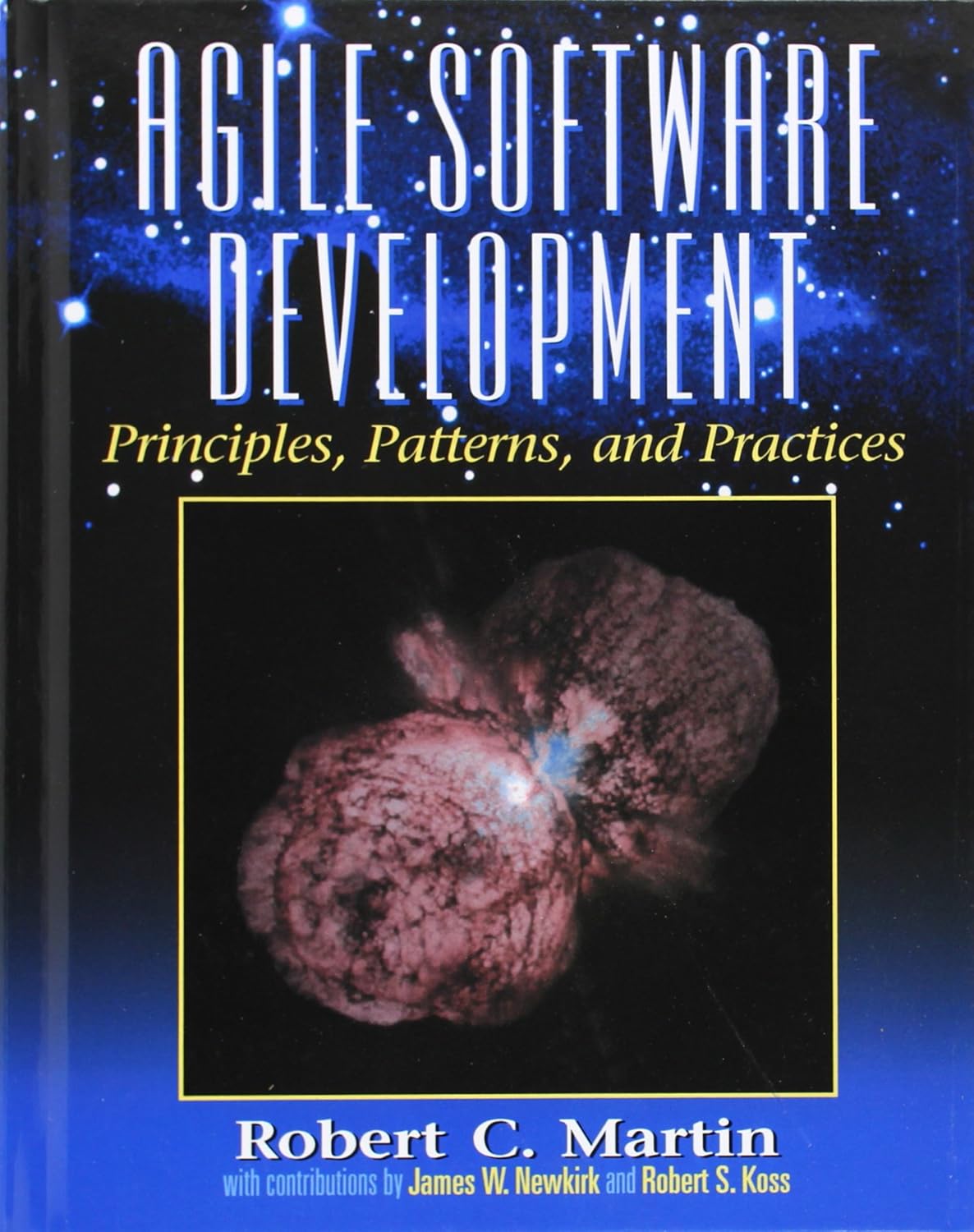
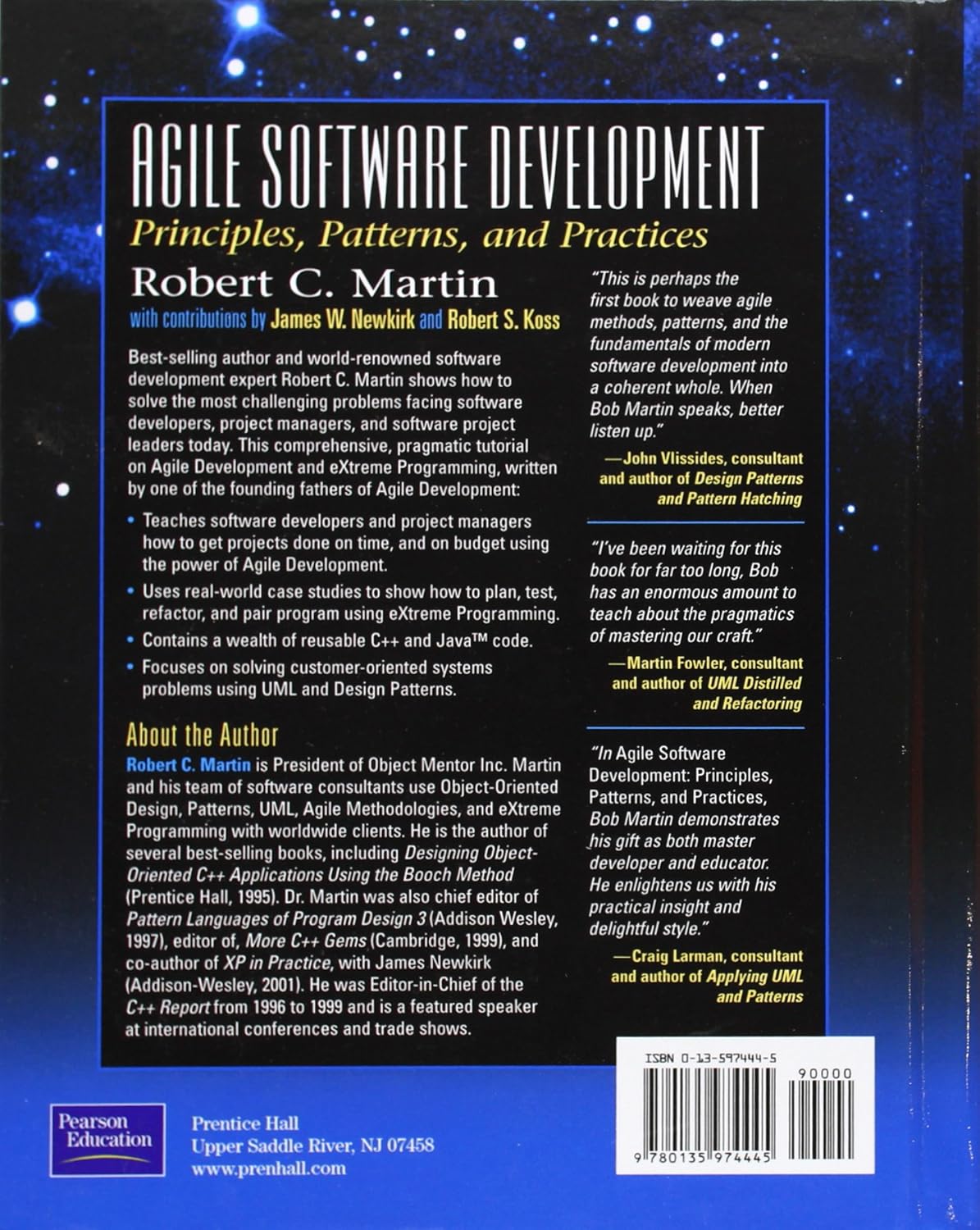
Agile Software Development, Principles, Patterns, and Practices
Original price was: $114.99.$94.75Current price is: $94.75.
Price: $114.99 - $94.75
(as of Nov 02, 2025 00:25:52 UTC – Details)
Written by a software developer for software developers, this book is a unique collection of the latest software development methods. The author includes OOD, UML, Design Patterns, Agile and XP methods with a detailed description of a complete software design for reusable programs in C++ and Java. Using a practical, problem-solving approach, it shows how to develop an object-oriented application―from the early stages of analysis, through the low-level design and into the implementation. Walks readers through the designer’s thoughts ― showing the errors, blind alleys, and creative insights that occur throughout the software design process. The book covers: Statics and Dynamics; Principles of Class Design; Complexity Management; Principles of Package Design; Analysis and Design; Patterns and Paradigm Crossings. Explains the principles of OOD, one by one, and then demonstrates them with numerous examples, completely worked-through designs, and case studies. Covers traps, pitfalls, and work arounds in the application of C++ and OOD and then shows how Agile methods can be used. Discusses the methods for designing and developing big software in detail. Features a three-chapter, in-depth, single case study of a building security system. For Software Engineers, Programmers, and Analysts who want to understand how to design object oriented software with state of the art methods.
Publisher : Pearson
Publication date : October 15, 2002
Edition : First Edition
Language : English
Print length : 552 pages
ISBN-10 : 0135974445
ISBN-13 : 978-0135974445
Item Weight : 2.25 pounds
Dimensions : 8.13 x 0.95 x 10.5 inches
Best Sellers Rank: #204,042 in Books (See Top 100 in Books) #47 in C++ Programming Language #50 in Object-Oriented Design #198 in Software Development (Books)
Customer Reviews: 4.6 4.6 out of 5 stars 128 ratings var dpAcrHasRegisteredArcLinkClickAction; P.when(‘A’, ‘ready’).execute(function(A) { if (dpAcrHasRegisteredArcLinkClickAction !== true) { dpAcrHasRegisteredArcLinkClickAction = true; A.declarative( ‘acrLink-click-metrics’, ‘click’, { “allowLinkDefault”: true }, function (event) { if (window.ue) { ue.count(“acrLinkClickCount”, (ue.count(“acrLinkClickCount”) || 0) + 1); } } ); } }); P.when(‘A’, ‘cf’).execute(function(A) { A.declarative(‘acrStarsLink-click-metrics’, ‘click’, { “allowLinkDefault” : true }, function(event){ if(window.ue) { ue.count(“acrStarsLinkWithPopoverClickCount”, (ue.count(“acrStarsLinkWithPopoverClickCount”) || 0) + 1); } }); });
Customers say
Customers find the book excellent for understanding Agile software development, particularly praising its clear explanations of popular patterns. Moreover, the book receives positive feedback for its readability and practicality, with one customer noting how it helped with school work and projects. Additionally, customers appreciate the writing style, with one mentioning it changed their coding approach. However, opinions on value for money are mixed, with some finding it worth the price while others consider it expensive.
User Reviews
Be the first to review “Agile Software Development, Principles, Patterns, and Practices”
Related Products
A Friendly Guide to Software Development: What You Should Know Without Being a Developer (Friendly Guides to Technology)


There are no reviews yet.